Mitsubishi Triton 2026 : Mitsubishi is quietly preparing to shake up the U.S. mid‑size truck scene with the 2026 Triton, a rugged, diesel‑powered pickup that’s already winning fans overseas under the L200 name.
While it’s not yet on every American dealer lot, growing speculation and official hints suggest the Triton could finally make a proper Stateside debut by mid‑2026, slotting in as a value‑oriented, off‑road‑ready alternative to the Ford Ranger and Toyota Tacoma.
Bold, Rugged Design with Modern Flair
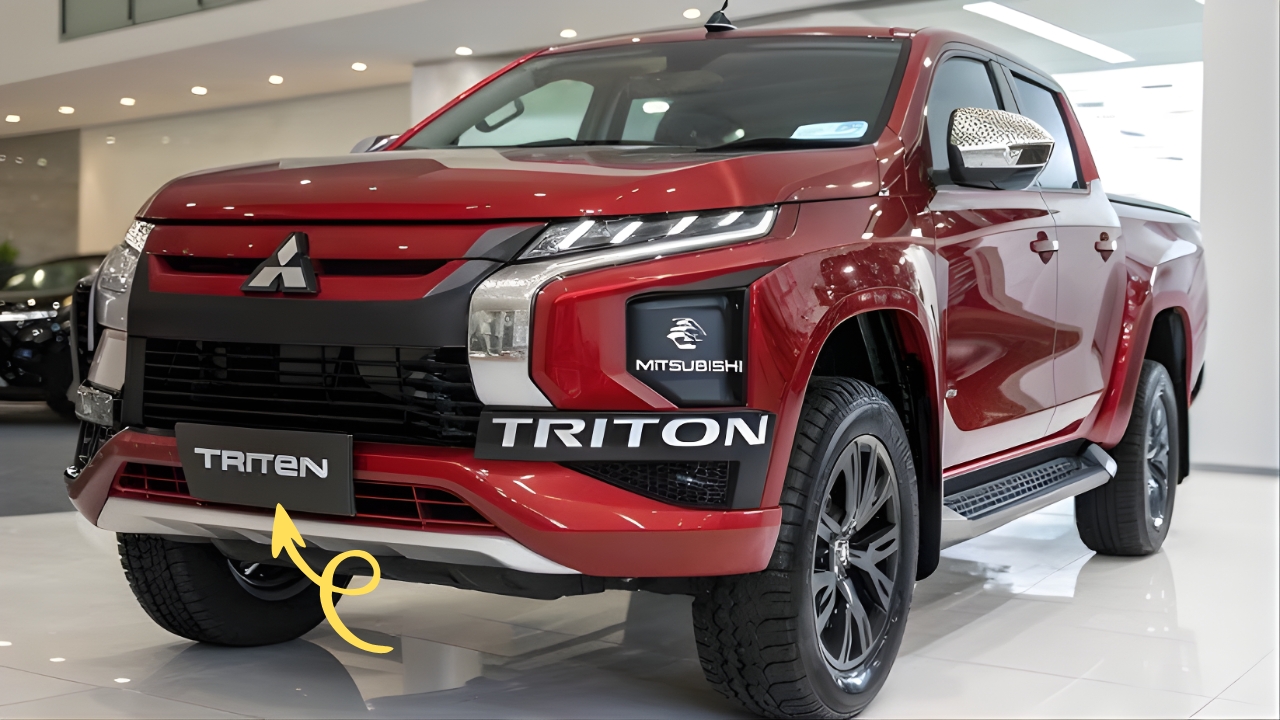
The 2026 Triton wears Mitsubishi’s latest “Dynamic Shield” front end with a wide, blacked‑out grille, sharp LED headlights, and aggressive lower air intakes that give it a tough, modern stance.
Sculpted fenders, squared‑off wheel arches, and chunky cladding reinforce its off‑road character, while a longer wheelbase and slightly wider track improve stability and cabin space over the previous generation.
From the side, the Triton looks like a true mid‑size workhorse: short front overhang, long bed, and a squared‑off rear end with vertical LED taillights and a practical step bumper.
Aerodynamic tweaks—smoother body lines, active grille shutters, and underbody panels—help keep wind noise down and fuel efficiency up without softening the truck’s rugged image.
Powertrain: Diesel Muscle with Real‑World Efficiency
At the heart of the 2026 Triton sits a 2.4‑liter twin‑turbo diesel four‑cylinder engine, tuned to around 201–204 horsepower and roughly 470 Nm (about 347 lb‑ft) of torque.
This engine is paired with either a six‑speed manual or a six‑speed automatic transmission, both calibrated to deliver strong mid‑range pull for towing and hauling while still feeling relaxed on long highway stretches.
Mitsubishi quotes fuel figures around 7.5–7.7 L/100 km (roughly 30–31 mpg‑US equivalent) for 4×2 and 4×4 variants, thanks to long gearing and a 75‑liter fuel tank that stretches range between fill‑ups.
A urea‑based after‑treatment system helps meet global emissions standards, though U.S. versions would likely need further tweaks to comply with American NOx and particulate rules.
Super Select 4WD‑II and Off‑Road Capability
The Triton’s standout feature is Mitsubishi’s Super Select 4WD‑II system, which lets drivers run in full‑time 4H on dry pavement without driveline bind, then lock the center differential in 4HLc or 4LLc for serious off‑road work.
A rear locking differential on higher trims, plus seven terrain modes (Eco, Gravel, Snow, Mud, Sand, Rock, and Normal), tailors throttle, traction control, ABS, and transmission behavior to the surface under the tires.
Underneath, the Triton rides on a revised ladder‑frame chassis with improved torsional rigidity, double‑wishbone front suspension, and heavy‑duty leaf springs at the rear that can handle payloads around 1,030–1,095 kg depending on configuration.
Braked towing capacity is pegged near 3,500 kg (about 7,700 lb), putting it firmly in Ranger and Tacoma territory for a mid‑size diesel pickup.
Interior, Tech, and Everyday Comfort
Inside, the 2026 Triton feels more like a small SUV than a bare‑bones work truck. A re‑angled steering column and extended wheelbase open up legroom for taller drivers, while an upright dash layout keeps controls easy to read and reach.
Materials are durable rather than flashy, with wipe‑down plastics, soft‑touch surfaces in higher trims, and plenty of storage cubbies, cupholders, and USB‑A/USB‑C ports.
A 7‑inch digital driver display sits between analog gauges, and a 9‑inch central touchscreen runs wired Apple CarPlay and Android Auto, navigation (where available), and Bluetooth audio.
Wireless charging appears on mid‑to‑upper trims, and the overall cabin layout is designed to feel spacious for families, tradespeople, and weekend adventurers alike.
Safety, Driver Aids, and U.S. Readiness
The 2026 Triton carries Mitsubishi’s latest ADAS suite as standard on many markets, including adaptive cruise control, lane‑keeping assist, emergency lane departure mitigation, blind‑spot monitoring, rear cross‑traffic alert, multi‑collision braking, trailer‑stability assist, and a surround‑view camera system.
It has earned a five‑star ANCAP rating with strong scores for adult and child occupant protection, which bodes well for any eventual U.S. crash‑test campaign.
For the American market, Mitsubishi would still need to adapt lighting, emissions hardware, and possibly add more comfort features—ventilated seats, upgraded audio, or more driver‑assistance options—to meet U.S. expectations.
Tariff and regulatory hurdles remain, but the Triton’s global success and Mitsubishi’s renewed focus on trucks make a Stateside launch increasingly plausible.
Mitsubishi Triton 2026 Pricing, Positioning, and Who It’s For
Analysts estimate a U.S.‑spec 2026 Triton could start around 32,000 USD before incentives, positioning it as a competitively priced diesel mid‑size pickup with strong off‑road hardware and real‑world efficiency.
That puts it in direct competition with the Ford Ranger, Toyota Tacoma, and possibly the Nissan Frontier, especially for buyers who want diesel torque, serious 4WD, and a truck that can double as a family hauler.
Also Read This : Cadillac Motorhome 2026 Ultra luxury bedroom, smart features, engine is V8
For American truck shoppers tired of gasoline‑only mid‑size options or looking for a diesel alternative to the Ranger and Tacoma, the 2026 Mitsubishi Triton could be the long‑overdue import that finally gives them a credible, rugged, and tech‑loaded choice from a brand with a proven pickup pedigree.